
What the Worms Know
A winter solstice interruption to the regularly scheduled programming

It’s the morning of the winter solstice. The sun has risen, the latest it will rise this year. Tomorrow, at this time, the sun will be higher, even if imperceptibly so. I decided to mark this day by pulling a card from the Cantigee Oracle deck written by Rae Diamond. The card is titled What the Worms Know.
Diamond spins up a story of Worm who witnesses all other earth beings struggling each day to eat or avoid being eaten. In making a request from the Spirit of the Earth, Worm asks to live a life free of striving for sustenance. Thus, instead of shapeshifting into a complex being with wings, fangs, scales, or legs, Worm “remained simple in form, and continued to live on and just within the Earth’s surface, where all things eventually fell” (p. 291).
I think of the worms on this first morning of winter, imagining them warm in the deep, damp pockets of the dark earth. Above, birds scavenge for what remains of berries and seeds from grasses and bramble gone pale.
Diamond prompts readers to entertain the Buddhist practice of maranasati, or the remembrance that death can come for any being at any moment. With this in mind, Diamond goes Oliver-esque, asking readers to contemplate how they might spend their life if they only had a year left to live, a month, a week, a day, this next breath.
In my own practice, I know of another wing of this, which is to contemplate the fact that you have already lived through the calendar day of your death however many times you have orbited the sun, even though that date remains hidden from you at this point.
I think of the cuckoo. Last spring, I had the honor to be invited to a pagan choir recital. The facilitator, Saro Lynch-Thomason, closed with a song of the cuckoo. Saro let us in on a legend of a cuckoo, saying that for some, the first time you hear a cuckoo sing, whatever action you are doing in that moment will be something you do often over the course of the season.
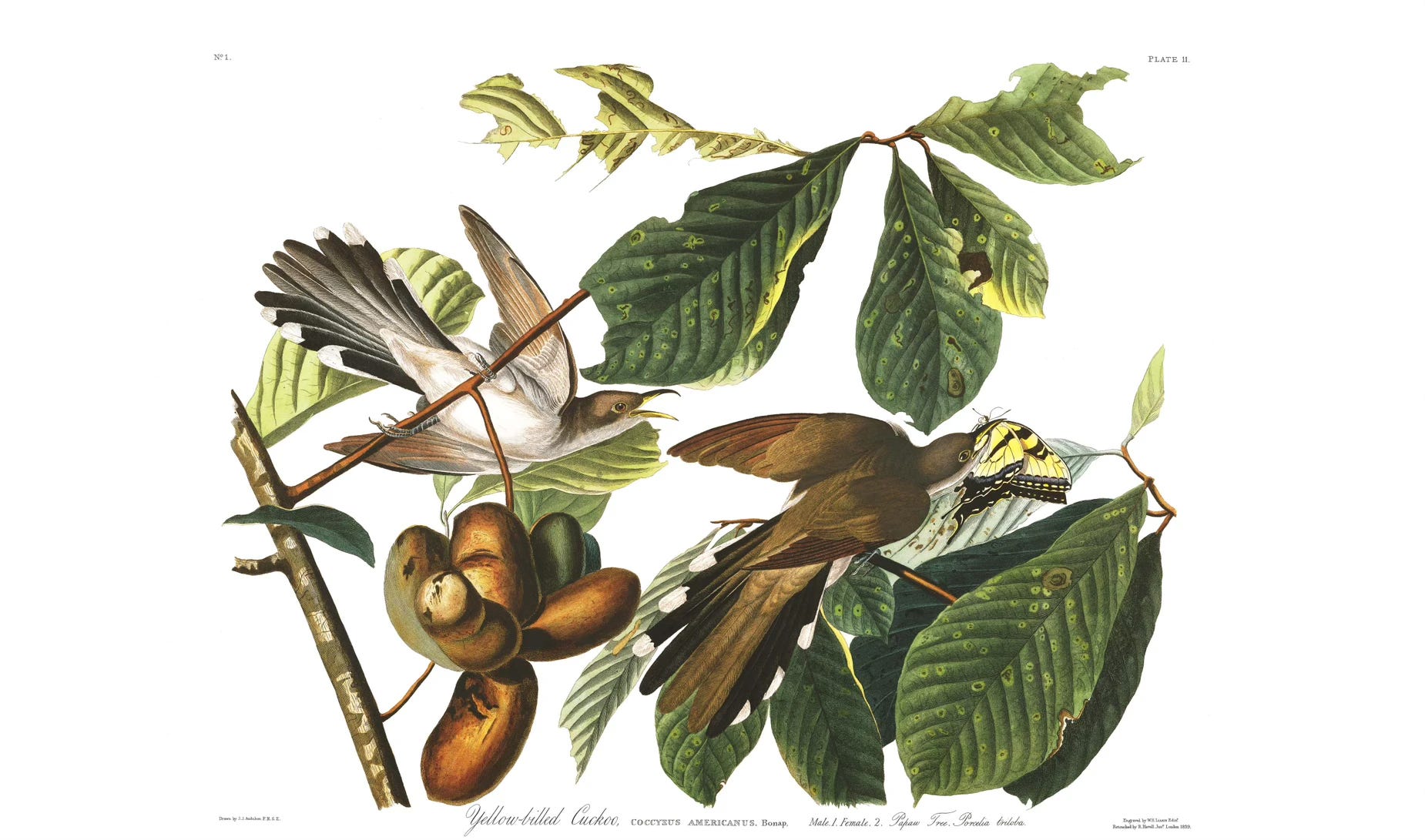
John James Audubon, Yellow-billed Cuckoo. Courtesy of the John James Audubon Center at Mill Grove, Montgomery County Audubon Collection, and Zebra Publishing.
As this marks the first day of winter, I think of how I might spend my time in this season. I close the book and go outside.
The birds are quiet. I stay still, facing a small copse of woods, and let them appear to me. What looks at first like a crumpled, grayed oak leaf moving in the wind becomes a sparrow, titling their head this way and that, kicking through the leaf litter, diligently and unhurried, maybe seeking worms for sustenance, or maybe seeking the worm’s knowledge and comfort of having enough sustenance.
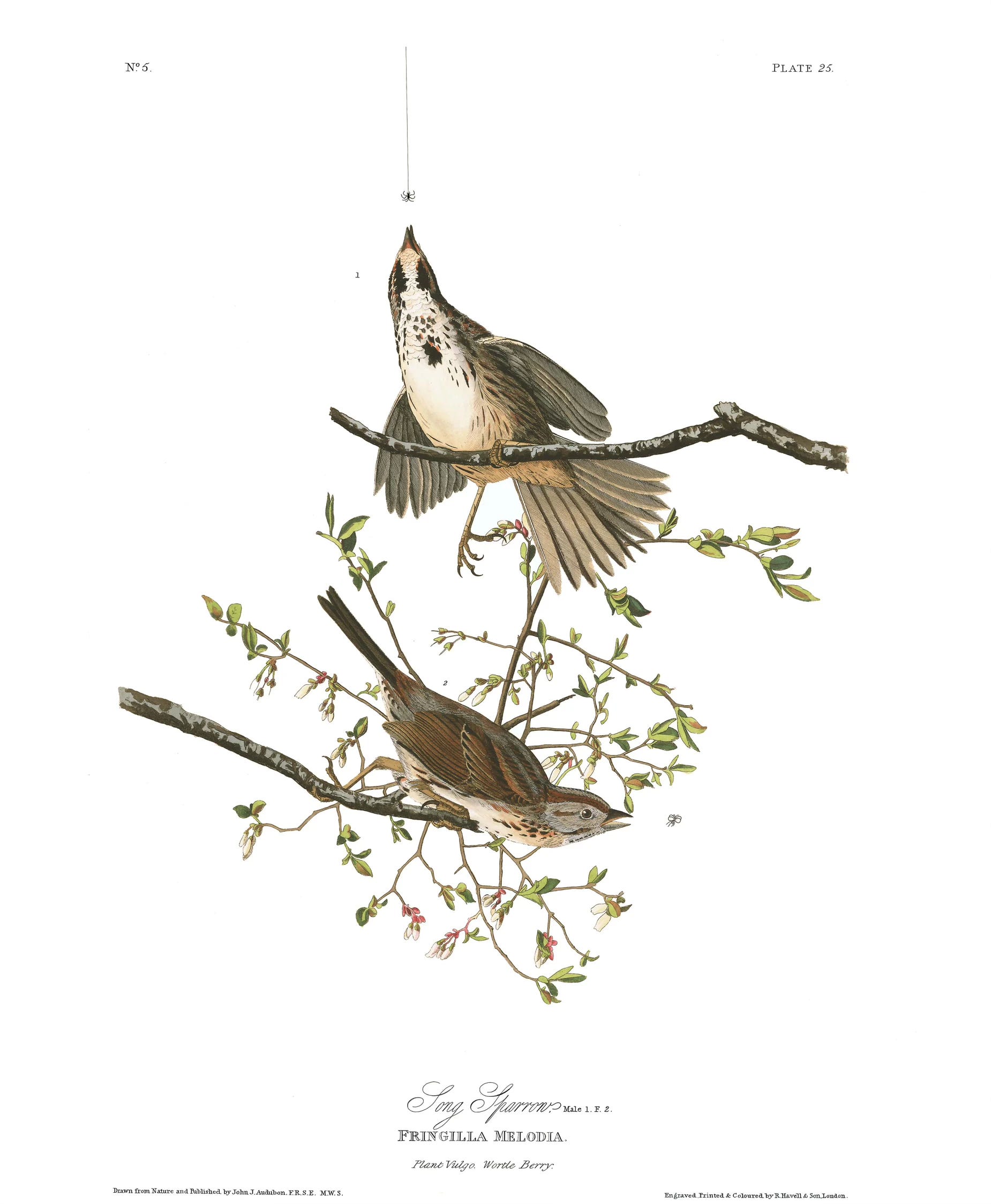
John James Audubon, Song Sparrow. Courtesy of the John James Audubon Center at Mill Grove, Montgomery County Audubon Collection, and Zebra Publishing.
Here’s a bird divination winter practice inspired by What the Worms Know:
Think of how you might want to spend your winter. If you’re feeling brave, maybe think of this winter as your last and then sit with how you wish to spend it.
Go outside and find a place you feel comfortable being.
Stand stock still for several moments and quiet your breathing if you can.
If you’re lucky enough to be facing brush, bramble, or branches of trees, notice any movement that occurs.
Does a bird appear for you? If so, what are they doing? How are they spending this moment? Is it spent witnessing their surroundings, foraging, singing, calling out for friends?
If visually no one appears (maybe you’re standing in a desolate parking lot), tune into the sounds around you instead.
First, notice silence. This is a kind of trick-prompt because even if you thought the world was quiet, trying to listen for silence will likely bring to attention how assaulted you are each moment by sound.
Notice any birds within this soundscape you are in. How far away are they? What are they singing about?
How does what you notice speak to how you wish to spend your winter?
In case you haven’t heard, my good friend and fellow ecopsychologist Miranda M. Hansen and I started what we are calling the Earthwild Ecology Club. Last weekend, we held our first virtual event where we offered participants nature connection practices that center ecologies of care. We’ll be hosting another virtual workshop in the new year.
Check out our website here to learn more.
References:
Diamond, R. and Zuspan, L. (2022). The cantigee oracle: An ecological spiritual guide and creative prompt deck. Huichin, unceded Ohlone land aka Berkeley, CA: North Atlantic Books.